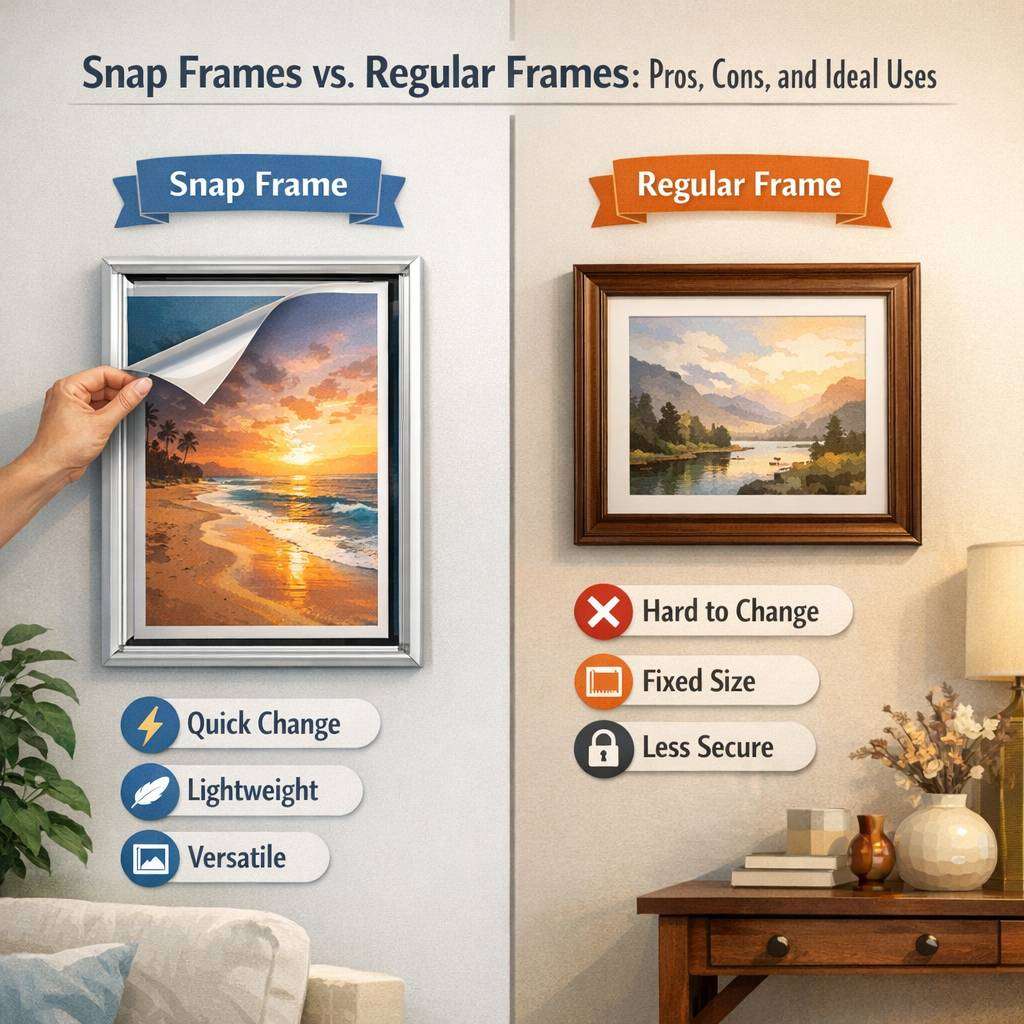
As an expert in display solutions, I’m often asked to compare snap frames with traditional regular frames. The choice influences not only aesthetics but also practicality, maintenance, and total cost over time. Below, I will outline the key differences, highlight the advantages and drawbacks of each option, and suggest ideal scenarios for their use. This guide uses clear distinctions and practical considerations to help decision-makers in retail, exhibitions, offices, and homes.
Snap frames are a versatile display solution, perfect for showcasing photos, art, or notices in homes and offices. For stylish, easy mounting, explore affordable options at snap frames. These lightweight frames protect imagery while allowing quick changes, making them ideal for rotating a gallery wall or schedule board. Durable materials and simple hardware mean you can refresh decor without hassle, ensuring your message stays bright and engaging for visitors.
Snap frames: what they are and why they matter
Snap frames, sometimes called snap frame display systems, are lightweight aluminium frames designed to hold posters or prints behind a hinged, spring-loaded front profile. The front cover usually snaps in and out with minimal effort, often without removing the frame from the wall. This means updates can be performed quickly, frequently, and with minimal mess.
- Ease of use: The primary benefit of snap frames is rapid poster changes. In busy environments such as galleries, gyms, or retail spaces, staff can swap graphics in seconds, improving workflow and reducing downtime.
- Tool-free operation: With only a push or gentle lift to release the front cover, staff do not need screwdrivers, tape, or adhesives. This reduces training requirements and error rates.
- Cost efficiency over time: While the upfront price per frame may be comparable or slightly higher, the ongoing cost of printing is often lower because you can reuse the same frame with new inserts more frequently.
- Clean presentation: Snap frames have a tidy, uniform look with crisp borders. The front cover protects the edge of the print and can help maintain a professional appearance in high-traffic areas.
However, snap frames are not without drawbacks.
- Limited size options: Snap frames are typically produced in standard sizes. If you require a highly customised aspect ratio or unusual dimensions, a traditional frame may be more versatile.
- Aesthetic constraints: The visible border of the frame and the mechanical edges can dominate the display, which may be less desirable for high-end art presentations or minimalist interiors.
- Durability considerations: While sturdy for their purpose, snap frames may suffer from wear after frequent openings, especially in environments with heavy use or exposure to dust and moisture. Seals and corners can degrade over time if not properly maintained.
- Wall compatibility: Some snap frames are designed for wall mounting only, which reduces flexibility if you want portable or freestanding displays.
Regular frames: characteristics and ideal contexts
Regular frames cover a broad category, from simple wooden frames to metal profiles with glass or acrylic fronts. They are often chosen for their classic aesthetic, durability, and versatility.
- Aesthetic versatility: Regular frames come in various styles, finishes, and sizes, allowing you to match interiors from traditional to contemporary. They are particularly well-suited for gallery spaces and premium retail where visual language matters.
- Longevity and prestige: A well-made traditional frame can convey value and care, supporting branding strategies that rely on perceived quality.
- Customisation: Framing shops can tailor mats, glazing, and mounting methods to exact specifications, including non-standard sizes or unusual aspect ratios.
- Security options: With traditional frames, you can incorporate UV-protective glazing, anti-theft features, and rigidity suited to long-term installations.
On the flip side, regular frames have some disadvantages in certain contexts.
- Slower updates: Replacing a print may require removing the frame, swapping the insert, and possibly re-glazing or sealing, which takes more time and may require tools.
- Higher maintenance in busy spaces: Dust, fingerprints on glass, and the risk of accidental damage increase in high-traffic environments. Regular frames may demand more cleaning and care.
- Higher upfront and lifecycle costs: Custom sizes or premium materials can push up initial investment, and occasional replacement costs for glas– or mountings can add to the total cost.
Ideal uses and how to choose
When choosing between snap frames and regular frames, consider the specific requirements of the space, the expected frequency of updates, and the desired aesthetic. Here are common scenarios and recommended approaches.
- Retail promotions and venue signage: Snap frames excel where messages change often and speed is a priority. Their exchange time is minimised, staff training needs are low, and the frames maintain a consistent look across multiple locations. If you have dozens of posts per month, snap frames become a practical workhorse.
- Art exhibitions and premium displays: Regular frames tend to be the better choice for high-end art or curated displays. They offer superior stylistic versatility, allowing curators to select exact finishes, matting, and glazing. For installations where visual impact and longevity matter, traditional framing often proves more fitting.
- Corporate environments: In offices or reception areas where messages need updating but a refined appearance remains important, a hybrid approach can work well. Use regular frames for permanent branding elements and snap frames for temporary notices, events, or directional signage.
- Budget and maintenance considerations: If ongoing maintenance budgets are tight or update frequency is high, snap frames may deliver superior lifecycle value. For projects with concentrated, long-term prints, investing in regular frames may be more economical.
Practical tips for deployment and maintenance:
- Lighting: Consider how ambient light affects readability. In bright spaces, ensure glazing choices or anti-glare options are appropriate for both snap frames and regular frames.
- Mounting and accessibility: For snap frames, ensure mounts allow easy front-loading and that frames are positioned at reachable heights for staff. Regular frames may require higher reach for changing contents if mounted at ceiling height or in recessed areas.
- Environmental conditions: In humid or dusty environments, snap frames with sealed front covers can offer better protection for the poster beneath. If you choose regular frames, consider sealing and protective glazing to reduce exposure.
- Standardisation: If your operation spans many locations, standardising on one framework can simplify training and maintenance. Snap frames offer consistency in insert handling, while regular frames provide consistency in aesthetic language.
In summary, snap frames and regular frames each bring distinct strengths to a display strategy. Snap frames prioritise speed, convenience, and cost efficiency for frequently updated signage, while regular frames deliver aesthetic flexibility, durability, and high-end presentation for longer-term or more designer-focused installations. By aligning your choice with update cadence, brand image, and environmental constraints, you can maximise impact and efficiency across your display portfolio. If you require further guidance tailored to your space, I’m happy to walk through specific dimensions, lighting conditions, and usage patterns.

Leave a Reply